

One Machine, Endless Jobs: The Ultimate Mini Excavator Attachment Guide
A mini excavator with only a bucket is great for basic digging. But attach the right tool, and it can suddenly break concrete, clear brush, grade land, or handle heavy material. The key is choosing attachments that actually match your machine’s capabilities.
This guide covers the most practical mini excavator attachments, what they do best, and how to make sure they work with your excavator.
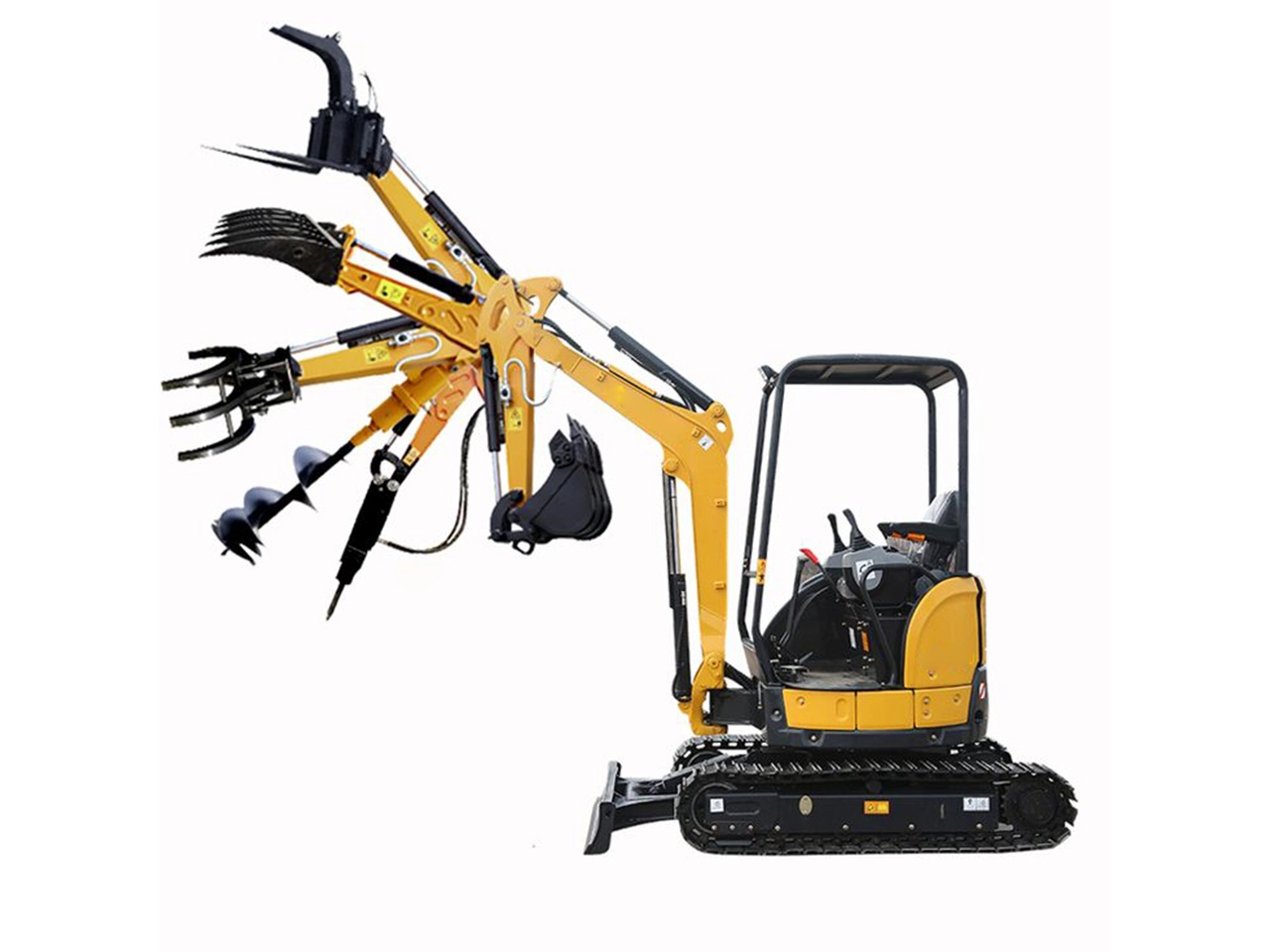
Digging and Trenching Attachments
1. Standard Digging Buckets
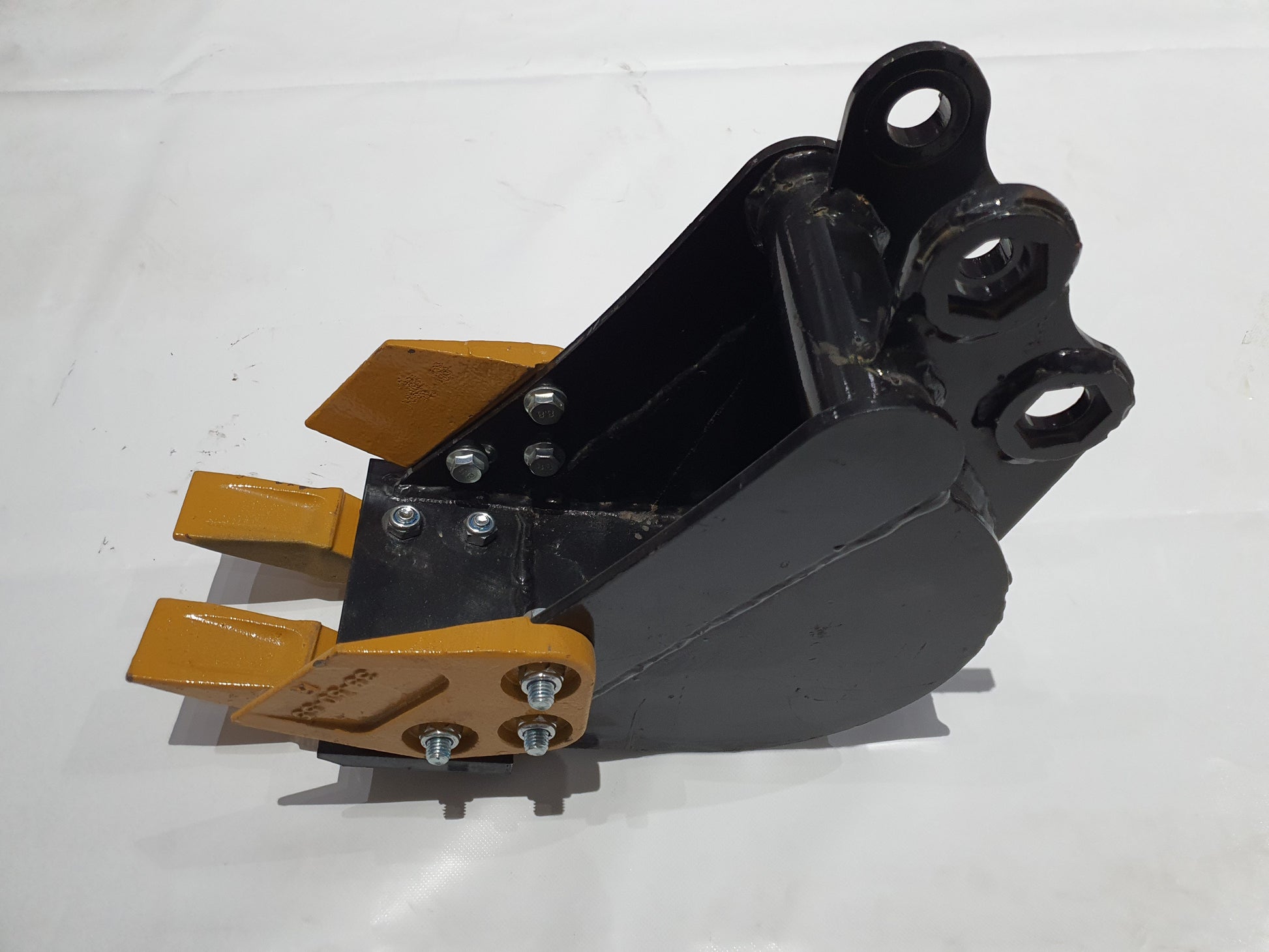
These are the go-to attachments for everyday excavation, loading trucks, and moving material. For 1–2 ton mini excavators, bucket widths typically range from 12 to 24 inches, with capacities from 0.88 to 4.1 cubic feet.
Tips for choosing:
- Match bucket width to your machine’s weight (a 2,000 lb excavator works best with a 12–16 inch bucket)
- Standard pin diameter: 0.98–1.18 inches
- Standard pin spacing: 3.54–3.66 inches
- Reinforced buckets with replaceable teeth last 2–3 times longer (though they cost $300–800 more)
2. Trenching Buckets
Narrow buckets (6–12 inches wide) are designed for clean, precise trenches for pipes, cables, and drainage. The 200mm trenching bucket, for example, is 8 inches wide and weighs just 37.3 pounds — perfect for utility work without tearing up your yard.
Deeper buckets (13–16 inches) produce cleaner trenches with less backfilling. Manganese steel versions offer 3–5 times better wear resistance in abrasive soil.
3. Grading Buckets
These wide, shallow buckets (36–60 inches) are made for final grading work. They feature smooth cutting edges that leave a clean, level surface without tooth marks. Capacities usually range from 3.45 to 15.7 cubic feet.
4. Tilting Buckets
Tilting buckets can rotate 45° left or right, allowing you to grade slopes and angles without constantly repositioning the machine. Available in 24–60 inch widths.
They require auxiliary hydraulics and typically use a single or dual hydraulic cylinder depending on size.
Land Clearing and Vegetation Attachments
1. Root Rakes
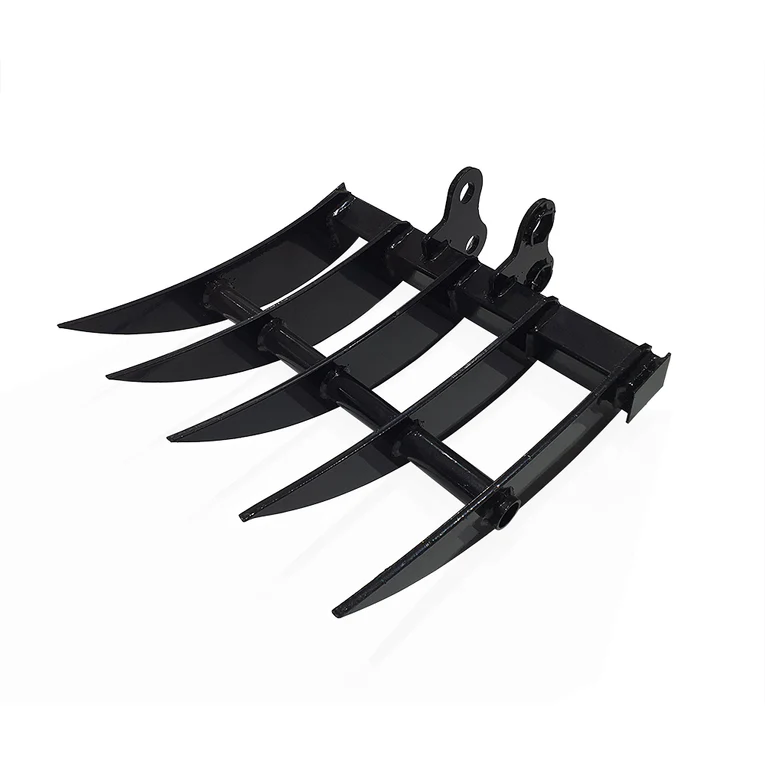
Root rakes have teeth spaced 4–6 inches apart to pull out roots and rocks while letting soil sift through. The 19.3" Mini Excavator Root Rake is made of durable manganese steel and includes quick-attach pins for fast installation.
2. Ripper Teeth
A single hardened steel ripper tooth concentrates force to break up compacted soil, frozen ground, or weathered rock. It delivers 3–5 times more penetration power than standard bucket teeth. Ripper is ideal for 1–2 ton excavators.
3. Mulching Heads
These rotating drums with cutting knives turn brush and small trees into mulch. They require 15–35 GPM of hydraulic flow and are best suited for excavators in the 7,000–10,000 lb range.
Demolition and Breaking Attachments
1. Hydraulic Breakers
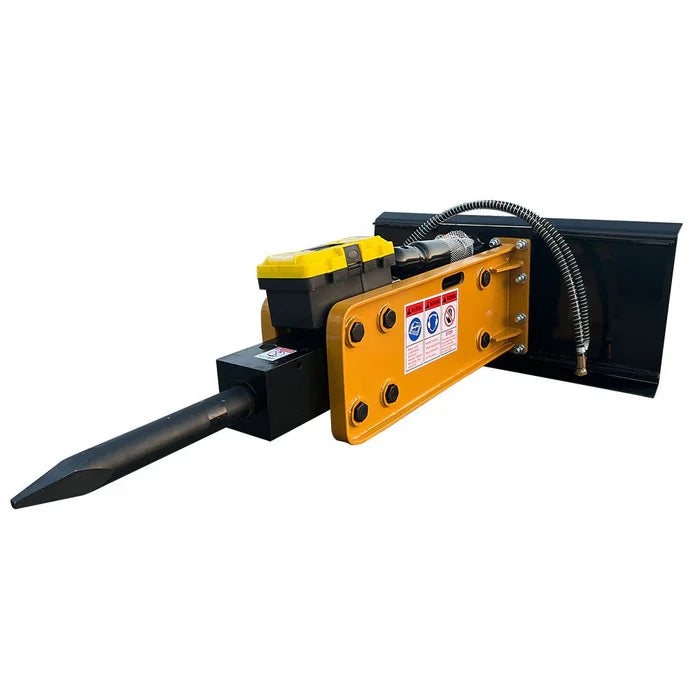
Mini excavator hammers deliver 500–1,200 blows per minute to break concrete, asphalt, and rock. Choose a breaker that weighs 10–15% of your excavator’s operating weight. The 165.3 lb breaker is a popular match for smaller machines. Most need 8–18 GPM flow.
2. Concrete Crushers
Jaw-style crushers use hydraulic force to crack and reduce concrete and stone. 12-inch jaw openings work well for residential slabs, while larger 18+ inch openings handle commercial foundations.
Material Handling Attachments
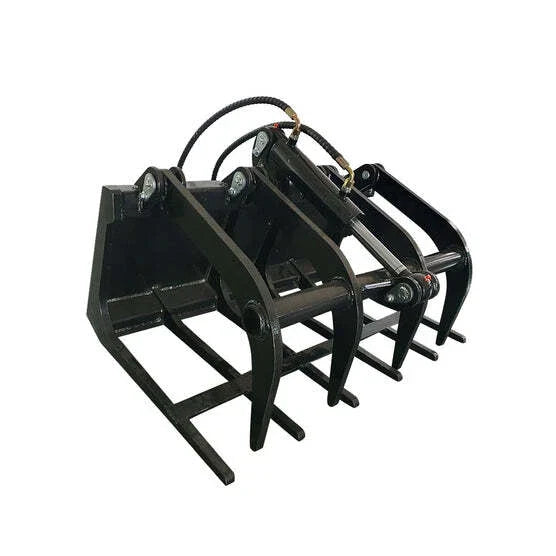
1. Grapples
Hydraulic grapples are excellent for picking up logs, rocks, brush, and debris. Serrated edges provide better grip on round materials.
2. Hydraulic Thumbs
A hydraulic thumb works together with your bucket like a hand, allowing you to grab irregular objects securely. Hydraulic Thumb (22 inches long) is designed for 1–2 ton excavators.
Finishing and Landscaping Attachments
1. Grading Beams
Long adjustable blades (6–12 feet) give you precise control for final grading. Laser-guided versions can hold grade within 0.25 inches automatically.
2. Compaction Wheels
These drum-style attachments compact soil, gravel, and base material. Vibratory models achieve higher density in fewer passes.
Tips for Choosing the Right Attachments
- Match hydraulic flow: Your excavator’s auxiliary flow (GPM) and pressure must meet or exceed the attachment’s requirements.
- Use a quick coupler: It lets you swap attachments in 30–60 seconds instead of 10–15 minutes.
- Buy for your most frequent jobs: Focus on the attachments you’ll actually use every week rather than trying to cover every possible task.
Final Thoughts
The right mini excavator attachments can dramatically expand what one machine can do. Whether you’re digging foundations, clearing land, or breaking concrete, pairing the right attachment with your machine’s capabilities will help you work faster, safer, and more efficiently.


